


What Does Safety Require?
Every June, communities across the country recognize Gun Violence Awareness Month.
The color orange appears on shirts, buildings, social media graphics, and community events. Names are spoken. Candles are lit. Families gather to remember loved ones whose lives ended too soon.
The month is important. So is what happens after it.

Gun violence is not a problem that arrives once a year. It lives in neighborhoods, schools, hospitals, courtrooms, parks, and living rooms every day. It shapes how parents think about their children's futures, how young people move through their communities, and how survivors carry grief long after public attention has moved on.
Nationally, firearms remain one of the leading causes of death for children and teenagers in the United States.
Thousands of young people are killed or injured by gun violence each year, while many more live with its consequences as witnesses, survivors, family members, classmates, and friends.
Those numbers tell part of the story. The rest of the story lives in the people behind them.
The grandmother raising grandchildren after a son is lost to violence. The young man recovering from an injury while trying to imagine a future that looks different from his past.
The mother who leaves flowers at a street corner every year because that is where her child took their last breath. The survivor who returns to work carrying trauma no one can see.
At BOSS, we encounter those stories every day.
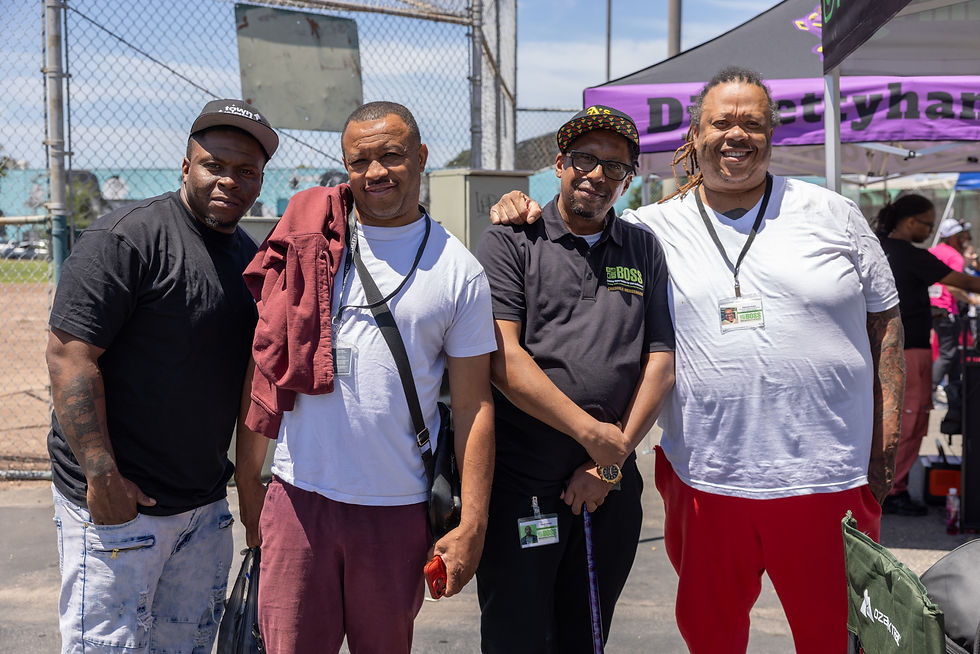
Through violence intervention, trauma recovery services, reentry programs, housing support, and community partnerships, we work alongside individuals and families navigating
the ripple effects of violence long after the headlines fade. We have learned that recovery is rarely a single moment. It is a process. Sometimes a long one.
That is why conversations about gun violence cannot begin and end with crime statistics.
They must include healing. They must include victims' compensation and survivor support. They must include trauma recovery services, mental health care, housing stability, workforce opportunities, and pathways for young people to see possibilities where they have only seen limitations. Most importantly, they must include the people closest to the issue.
One of the most important lessons emerging across the country is that violence is not inevitable. It is preventable. That belief sits at the heart of Community Violence Intervention (CVI), a growing field that invests in trusted messengers, outreach workers, violence interrupters, survivors, clinicians, and community leaders who work every day to reduce harm and create alternatives. These approaches are rooted in relationships rather than reaction. They focus on prevention rather than punishment alone.
And they are producing results.

Community violence intervention workers, violence interrupters, outreach workers, street advocates, and credible messengers are often the last line of prevention between a conflict and a tragedy. They work in the hours and spaces where traditional systems cannot or do not go: late nights, street corners, hospital trauma bays, and the homes of families in crisis. They are trusted because they have lived in proximity to the same conditions, the same pressures, and in many cases the same losses as the people they serve.
This work is not supplemental to public safety. It is public safety. Research consistently shows that well-implemented CVI programs reduce shootings, reduce retaliatory violence, and reduce homicides in the neighborhoods where they operate. Oakland's own progress on gun violence reduction in recent years reflects what happens when communities invest in this model and sustain it over time.
BOSS operates as a community violence intervention organization and long-standing DVP partner, deploying violence interrupters, outreach workers, and life coaches in East Oakland and Deep East Oakland, the communities carrying the heaviest burden of gun violence in the city.
The work does not begin after a shooting. It begins long before, in the relationships, the presence, and the trust that make intervention possible when it matters most.

Oakland has experienced significant reductions in shootings and homicides in recent years, with city leaders, researchers, and community organizations pointing to coordinated violence prevention efforts, community intervention strategies, and cross-sector partnerships as important contributors to that progress. Oakland recorded its lowest homicide levels in decades while continuing to invest in violence reduction and intervention efforts.
That progress matters.
But progress should never lead to complacency. Every decline in violence represents lives that were not lost. Families that did not receive devastating phone calls. Children who made it home safely. Communities that experienced one less tragedy.
The question is whether we are willing to continue investing in what is working. That investment takes many forms. It looks like healing circles where survivors can speak openly about their experiences. It looks like partnerships with organizations working on violence prevention and public health. It looks like advocating for policies that support victims and survivors while expanding opportunities for prevention and intervention. It looks like helping individuals access housing, employment, counseling, and community support after experiencing trauma.
Gun Violence Awareness Month asks us to pay attention. The larger challenge is deciding what we do with that attention once we have it.
What role should communities play in preventing violence?
What responsibilities belong to government, healthcare systems, schools, faith institutions, and community organizations?
What would it look like to invest in healing with the same urgency we often reserve for responding to harm?
These are not questions for policymakers alone. They belong to all of us.
Safer communities are not created by a single program, organization, or institution. They are built through relationships, sustained commitment, public investment, and people who refuse to accept violence as inevitable. The work continues long after June. For many families, it continues every day.
Join the Work
BOSS partners with community violence intervention leaders, survivors, clinicians, advocates, and public agencies to support healing, prevention, and pathways to stability across Alameda County.
Learn more. Stay informed. Show up.
Because awareness is only the beginning.


Для повсякденного читання час від часу переглядаю Lifehata, де трапляються практичні теми про стосунки, дім і різні життєві ситуації. Ще корисні матеріали знаходжу на Infosaray, особливо коли хочеться почитати про здоров’я, харчування чи цікаві факти. Сучасні теми, техніку та повсякденні питання зручно переглядати на Infovayb, а матеріали про догляд, самопочуття й особисте життя часто шукаю на Vrazhay. Для практичних порад і побутових рішень іноді заходжу на Poradka, а ще один ресурс із різними корисними темами — Sutovychok, який теж варто мати в закладках.
The gram-based macro display is a helpful feature of a calorie calculator because it connects nutritional calculations with everyday meal planning. Users can use the numbers as straightforward references when organizing their food intake.
Drift Hunters is an engaging driving game centered on controlled slides and precise handling. Players need to manage steering, throttle, and timing carefully, as maintaining a clean drift through each corner depends on both quick reactions and steady control.